Possible Vulnerabilities of PostQuantum Cryptography to Attacks with Physics Beyond the Standard Model

Updated: May 8
What if our newest "quantum-resistant" cryptographic standards are vulnerable to neglected physics at the intersection of quantum and classical approaches and physics beyond the standard model?

I want to walk you through something I've been thinking about since I was a student of Fields Medalist Richard Borcherds at UC Berkeley. Borcherds specializes in lattice mathematics and string theory, and he is famous for solving the monstrous moonshine conjecture. Sitting in his classes planted a seed that has grown into what I think is one of the more uncomfortable questions in modern security research.
Presentation
The setup
Most security professionals know the basic story. Quantum computers are coming. They will eventually break the cryptographic primitives we rely on today. In response, NIST has been standardizing what we call post-quantum cryptography, and back in 2018 (when I happened to be visiting Boulder, Colorado) they put out the first round of candidates supposed to be resilient to both quantum and classical attacks.
Here is the part people gloss over. That resilience has never been fully proven. It is a strong conjecture, not a theorem.
The cryptographic community got a sharp reminder of that when one of the candidates, SIKE (supersingular isogeny key encapsulation), was cracked in about 62 minutes on a standard Intel CPU. Not a quantum computer. A standard CPU.
Most of the surviving post-quantum schemes lean on what are called lattice problems, and specifically on the difficulty of the Shortest Vector Problem over a high-dimensional lattice, or its close geometric cousin, the non-commutative torus. The bet is that finding the shortest vector in that kind of structure is computationally infeasible for any classical or quantum attacker.
My own bias has always been that any claim of truly unbreakable encryption is too hubristic a request to make of the universe. Nature has a long track record of collapsing our strongest assumptions when we get too confident. So I have been looking for where the next surprise might come from.
The bridge nobody is crossing
What I have come to believe is that there is an entire class of physics, sitting at the intersection of classical and quantum (sometimes called physics beyond the standard model) that has gone almost completely unexamined as an attack surface.
To see why this matters, you have to notice some strange coincidences in the literature.
The NP-hard Shortest Vector Problem turns out to be deeply related to the so-called Learning With Errors problem, which is the same mathematical structure researchers use to understand how the brain efficiently performs the equivalent of backpropagation. Approximate-SVP and Learning With Errors are tightly linked through Regev's reduction. Some neuroscientists have proposed that LWE-like structures appear in cortical computation. It is also related to the perceptual binding problem, which is the question of how the brain stitches sensory features into a unified, coherent experience.
The perceptual binding problem has been mapped to the Shortest Vector Problem in published work by researchers like Tsotsos, where alternative theories like predictive coding have their own issues. Brain neural networks have been mapped to high-dimensional lattices and non-commutative tori in academic literature by groups like the Blue Brain Project. And here is where it gets stranger. The Shortest Vector Problem has also been tied to the black hole information paradox, because that paradox is essentially a cryptographic question. Information flows one way across the event horizon, but quantum theory demands unitarity, so the information must somehow escape in scrambled form.
So you have three NP-hard problems that look identical at the level of mathematical structure in the same universality class. Post-quantum cryptography. The brain's binding of conscious experience. The black hole information paradox. If they really are equivalent, then any physics that resolves one of them is in principle physics that breaks the other two.
What if we used neurons?
In theory, you could take a culture of biological neurons, stimulate them to encode a particular lattice problem (which Hamiltonian engineering can in fact do), and then read out the shortest vector by spectral analysis. Studying the physics of how this works might also shed light on the black hole information paradox.
How do you actually retrieve the shortest vector from a culture of neurons? The answer involves a layer of biology underneath the neural network itself.
Microtubules, biophotons, and the spectral readout
Inside neuronal cytoskeletons there are long cylindrical proteins called microtubules. Mounting evidence suggests they host topologically protected fermionic spin states. This matters because the brain runs on roughly 20 W of power, which is preposterously efficient compared to the supercomputers that some of our tech leaders now want to power with their own dedicated nuclear power plants. Pure electrochemical signaling cannot account for that efficiency. Something more is going on.
The picture I find compelling is that microtubules host entangled networks of these fermionic spin states distributed across the tissue. These networks are driven toward saturation, and at a critical phase transition the information stored in those entanglements gets bosonized into light-like modes. In experiments this looks like superradiant cascades of ultra-weak Majorana-like vortex biophotons, biophotons that carry a quantum property called orbital angular momentum, and that orbital angular momentum is the carrier of the information previously held in the spin states.

At critical points, those superradiant cascades might broadcast error backpropagation across the brain tissue, which would account for perceptual binding. There are experiments showing the cascades exist, and that light can indeed modulate long-term potentiation and long-term depression in neuron cells.
The picture I am sketching would imply that the lattice geometry is in some sense readable from the spectrum of the emitted photons. Whether that readout is computationally efficient, that is, whether it actually solves SVP rather than just exposing it, is a separate and much harder question. Standard quantum complexity (BQP not believed to contain NP) suggests that no physical readout, classical or quantum, gets SVP for free. An efficient attack along these lines would require either new complexity-theoretic franeworks or physics genuinely outside the standard model.
Frameworks in math, physics, and computer science have required modifications before to accommodate new discoveries, however, and the suggestions here do warrant further study.
If this picture is right, then in principle you should be able to extract the shortest vector over your encoded lattice space by doing spectral analysis on this light. The shortest vector should show up as the smallest non-zero eigenvalue. Recent work has also shown that orbital angular momentum light is capable of storing information about exactly the kind of high-dimensional lattice geometries you would need.
The evidence has been quietly piling up
Experiments with xenon anesthetics that block microtubule channels showed that the specific isotope of xenon used modulated anesthetic potency. Different isotopes differ in nuclear spin, not chemistry. That is a strong hint that the quantum property of spin is implicated in the way the brain processes information, via what is called the radical pair mechanism.
We also know, fairly confidently at this point, that the brain's speed and efficiency cannot be fully accounted for by electrochemical signaling alone, and that information is non-locally distributed across the tissue in a way very unlike a von Neumann architecture.
Studies of microtubules have found resonance frequency peaks across scales that are consistent with conformal field theories, and even time-crystalline behaviors, both of which could be implicated in how microtubules facilitate backpropagation. The picture is that fermionic, possibly Majorana-like spin states are hosted within the hydrophobic pockets of microtubules, the information gets bosonized into superradiant cascades, and the microtubules themselves act as optical waveguides.
Microtubule theories of consciousness or brain function have historically been criticized because they sometimes invoke what seem like bizarre ideas of quantum gravity or macroscopic quantum entanglement, and they do not appear to be viable based on the physics most of us were taught. Newer investigations push back on those assumptions. A whole emerging field called quantum biology now points to under-examined quantum effects being necessary to explain things like cellular signaling, photosynthesis, avian navigation, olfaction, and even patterns in human decision-making that look more like quantum interference than classical probability.
Tegmark's 2000 decoherence criticism of Orch-OR was directly rebutted by Hagan, Hameroff, and Tuszyński in Phys Rev E (2002), who argued he modeled the wrong system (24 nm separations versus the smaller ones Orch-OR actually proposes) and ignored shielding mechanisms like Debye counterion layers, ordered water, and lattice-based error correction; their recalculation extended decoherence times by seven orders of magnitude, though still short of the 25 ms target. Subsequent experimental work, especially Babcock et al. 2024 demonstrating UV superradiance across tryptophan mega-networks in microtubules, plus xenon nuclear-spin anesthesia studies and the broader quantum biology field, has chipped further at the "warm-wet-noisy means impossible" framing without actually proving Orch-OR.
On the Penrose-Diósi side, Donadi et al. 2021 (Nature Physics) ruled out only the natural parameter-free version of the model using Gran Sasso germanium detectors, leaving regularized versions with larger R₀ alive; however, the 2024 follow-up by Figurato et al. showed that closing the remaining gap would require 18 orders of magnitude better experimental sensitivity, which is brutal but not strictly a falsification, and dissipative variants and alternative gravitational collapse models remain on the table. Some forms of structured OAM light like what are called "Hopfions" can preserve quantum properties at scale. Additional work on quantum chaos or topological protection might close the gap.
The mathematics behind all of this lives in some surprisingly familiar places. Twistor theory describes null light geodesics. Einstein-Cartan theory describes spacetime torsion along those geodesics. In string theory, the information carried by light with orbital angular momentum is sometimes called "soft hair" and shows up as one theoretical angle for resolving the black hole information paradox.
The transition of information from fermionic spin entanglements (sometimes called hidden islands of entanglement entropy in the literature) into light-like modes in superradiant cascades can be described with Z2 orbifolds. The behavior at the phase transitions can be described using the Riemann zeta function. There have been recent studies that managed to replicate the zeros of the Riemann zeta function by periodically driving qubits, in models that explicitly link the zeta function to the behavior of Majorana spin states in curved spacetimes, which can be simulated in those environments. Both of these point at a possible resolution to the Hilbert-Polya conjecture, which speculates that the Riemann zeta zeros might eventually be observed as the energy levels of a real quantum physical system. Separately, the Riemann zeta function has been linked to macroscopic quantum-like physics in fluid turbulence, quantum chaos, and phase transitions in nonlinear systems.
There are also adjacent experimental approaches that get at the Shortest Vector Problem from a different angle, including spin glasses and folded spectrum methods.
Penrose and Hameroff's model says the phase transition I keep describing is facilitated by gravity itself. At the critical point, macroscopic quantum superpositions and entanglements of those spin states saturate a complexity bound, possibly forming what are called Frohlich condensates, after which the information stored in those entanglement islands or entanglement wedges is discharged in what they call an objective reduction event, broadcast through the superradiant cascade. That cascade is the macroscopic quantum-like behavior, and the gravitational feedback adjusts dendritic weights, which is to say, it facilitates learning in the neural network. This is supposed to be the resolution to the measurement problem and an explanation for why we do not observe the world around us in superposition. Whether that holds up is going to take more experiments.
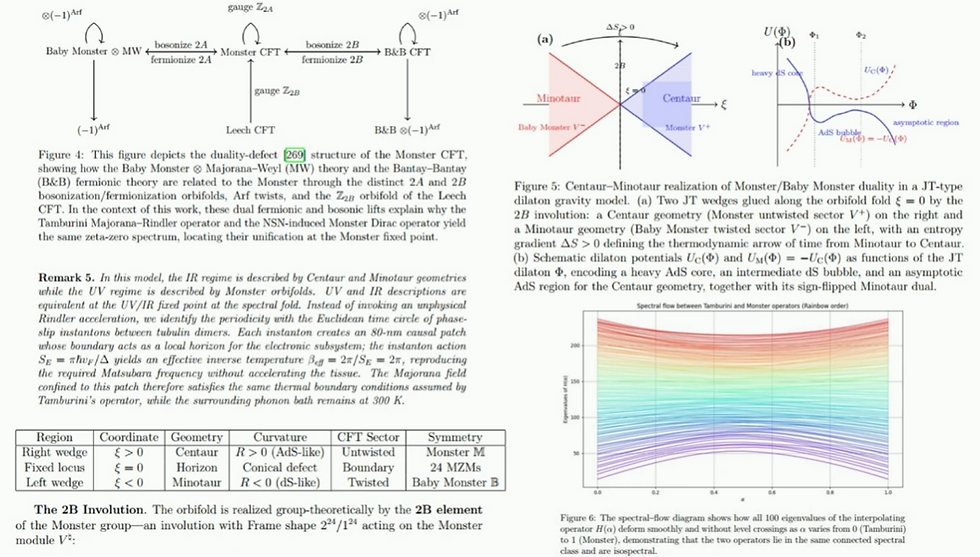
It is also conceivable that the information about a black hole interior may escape encoded in a similar fashion, printed on light with orbital angular momentum, in which case spectral analysis is the right experimental tool there too.
Here is what I want every security professional reading this to sit with for a moment.
Your trust in post-quantum cryptography rests on the assumption that nobody can find an efficient way to solve the Shortest Vector Problem. The mathematical literature already links that problem to two phenomena (the brain's binding of experience, and the black hole information paradox) that are subjects of active investigation by top scientists, major corporations, and governments. They are taking it seriously. You might think it is a fringe theory. You are free to think that. But you might also be left behind.
Even if every specific claim I have made above turns out to be wrong, the underlying point stands. There is a road map here for a class of attack on post-quantum cryptography that does not look anything like a classical attack or a standard quantum attack. That alone should be fuel for healthy skepticism toward the marketing language around "quantum-resistant" anything, and toward the viability of the AI architectures we are currently betting the global economy on.
A closing thought on AI
I will end somewhere that might surprise you. The same physics has implications for the current AI boom. If the brain's efficiency relative to our silicon really is a story about microtubule-hosted spin states and bosonized light, then the next breakthroughs in artificial intelligence may not come from scaling up data centers powered by Manhattan-sized nuclear plants and launched into orbit, which some of our tech leaders are now openly proposing. Sort of a crazy idea when you say it out loud. It also may not come from gold-plated nanowires at milliKelvin temperatures.
It might come from a deeper understanding of what makes us human, of how our brains work, and of how that physics extends through our relationships and into our communities.
It might, in other words, be more economical to invest directly in people than in data centers.
That is the conclusion I keep arriving at. I think it is worth taking seriously.


Comments