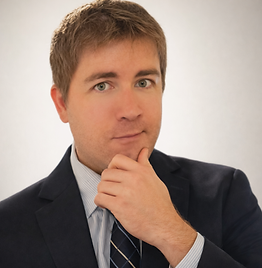
Trevor Nestor
University Lecturer, Traveler, and Independent Researcher


-modified.png)
.png)


Research Interests


I have been an english instructor in China, philosopher of history, engineer, and physicist with deep interest in a number of theoretical fields. As a previous student of fields medalist Dr. Richard Borcherds at UC Berkeley in EECS, I have an interest as an independent researcher in emerging theories of physics and their implications for technology and society, like postquantum lattice cryptanalysis, socioeconophysics/cybernetics, magnetohydrodynamics, biocompute platforms, mathematics, and optics.
In my career I have worked on experimental autonomous flying vehicles, experimental biomedical devices, automotive applications, quantum lidar, and financial analysis. In my career I have worked at big tech companies like Boeing, Meta, and Microsoft (where after a discussion with Peter Carroll I started their Chaos Magick org) as well as the Information Physics Institute, where I have worked in AI research and published on Majorana physics. I was accepted into LSU's remote MBA graduate program. I have been cited by WEF scientists, researchers at Oxford University and Georgetown, and have secured partnerships with Universities including MIT and Harvard. I have been invited to speak at conferences like APS, TSC, and IPI.
I spent over a year living off-grid in a "tiny home" trailer I built in the harshest possible conditions traveling across the United States - in temperatures colder than the arctic in Iowa and in the Arizona desert during the summer. Ever since then I've had to approach research independently through the Information Physics Institute instead of conventional institutions. I have seen firsthand what happens when cutting public investments into housing and the sciences can leave some of the brightest minds with nowhere to go.
My personal philosophy is that science by its nature transcends traditional, cultural, and ethnic barriers and is inherently a democratic and participatory process, and is best done openly where it can be freely accessed without paywalls or government/corporate gatekeeping, and that without this, science can become distorted both in its application to help people and in interpretation of results. I have participated in open source "citizen science" initiatives like IndieLab under the supervision of Dr. Slavin. The privatization and gatekeeping of science and technology or its use for financial engineering rather than public benefit can become a dangerous force in society. My own consulting work is done to allow me to pay my bills. Contributions to science can come from people from any level of education or background and the curiousity people feel is what drives it forward. Science is amoral but can be properly guided by a cultivation of a culture of openness rather than concealment.
I am the Founder and CEO of Dreamscape Systems Inc, The Nestor Foundation, King James Zen School LLC, and a researcher at the Information Physics Institute. I have recently (2026) left China where I received job offers for the University of Chongqing/Jinan/Shenyang but declined due possible work in East Timor with the USTDA.
You can read my policy positions below:
https://www.trevornestor.com/post/principles-for-renewed-national-dynamism
Portfolio


Some of my projects include audio modulated tesla coils, "flying cars," lasers, and nanobiocomputing systems. I worked on the US anti-ICBM system and on Blue Origin BE-4 rocket engine controllers.
See my older instructables.com page for DIY projects I've done over a decade ago:
https://www.instructables.com/member/TheHomebrewGuru/instructables/


Publications


Nestor, T. (2026). Orbital angular momentum mode-mixing for Laguerre–Gaussian beams scattered by Kerr black holes. Zenodo. https://doi.org/10.5281/zenodo.19830674
Nestor, T. (2026). Parity-Sector Signatures in Ultraweak Photon Emission from Driven-Dissipative Majorana Spin Systems. IPI Letters, 4(1), 26–36. https://doi.org/10.59973/ipil.321
Nestor, T. (2025). Why Current AI Architectures are Not Conscious: Neural Networks as Spinfoam Networks in a Theory of Quantum Gravity. IPI Letters, 3(5), 43–123. https://doi.org/10.59973/ipil.307
Nestor, Trevor. (2025). Theoretical Approaches to Solving the Shortest Vector Problem in NP-Hard Lattice-Based Cryptography with Post-SUSY Theories of Quantum Gravity in Polynomial Time by Orch-Or. IPI Letters. O1-O62. 10.59973/ipil.171.
Nestor, Trevor, AI Models Are Not Conscious and Are Massively Inefficient, Causing Complexity and Scalability Bottlenecks to Artificial General Superintelligence Risking Technological Singularity and Loss of Societal Dynamism or Institutional Collapse and Renewal (June 16, 2025). Available on Zenodo: (PDF) AI Models Are Not Conscious and Are Massively Inefficient, Causing Complexity and Scalability Bottlenecks to Artificial General Superintelligence Risking Technological Singularity and Loss of Societal Dynamism or Institutional Collapse and Renewal
https://ninza7.medium.com/the-ai-revolution-is-eating-itself-alive-967b6e2ed1b3
Nestor, Trevor. (2025). Solving NP-hard Problems - A Journey Through the Hardest Problems in the Universe